
How Does a Custom Hydraulic Hose Solution Meet Your Needs?
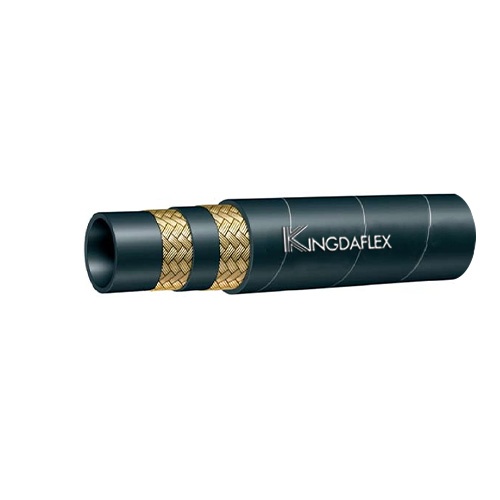
A custom hydraulic hose solution matches the hose structure, size, fittings, and materials with specific equipment requirements. By adjusting pressure ratings up to 6000 psi, temperature ranges from -40°C to 120°C, and routing designs, customized hoses can reduce installation issues, improve service life, and maintain stable hydraulic performance in construction, mining, agriculture, and industrial systems.
Hydraulic systems often operate under conditions that standard hoses cannot fully match. Equipment such as excavators, loaders, agricultural machines, and industrial presses may use different pressure levels, movement patterns, and installation spaces. A hose designed for general use may not provide the same performance as one developed for a specific machine.
A custom hydraulic hose solution starts with analyzing working pressure, fluid type, temperature, bending frequency, and connection requirements. Many mobile hydraulic systems operate between 3000 psi and 5000 psi, while some high-pressure applications exceed 6000 psi. Selecting the correct reinforcement structure helps maintain stable operation during repeated pressure cycles.
A hose assembly must handle pressure, movement, vibration, and environmental exposure at the same time.
Pressure selection affects both safety and service life. SAE standards such as SAE 100R1, SAE 100R2, SAE 100R12, SAE 100R13, and SAE 100R15 define different hose constructions for different operating conditions. A two-wire braided hose may suit medium-pressure equipment, while spiral-wire hoses are commonly used for high-pressure applications requiring frequent impulse cycles.
Manufacturers usually select reinforcement layers based on actual equipment conditions instead of choosing the highest pressure rating available. A hose that is too flexible may not handle pressure pulses well, while an oversized hose may increase installation difficulty. Matching reinforcement design with operating pressure can extend hose service life by reducing internal stress.
The hose diameter is another factor that affects hydraulic performance. Inner diameter controls oil velocity and pressure loss. If the diameter is too small, fluid resistance increases and heat generation rises. If the diameter is too large, response speed may decrease in precision hydraulic systems.
For example, a hydraulic system with a flow rate of 40 liters per minute may require a different hose size compared with a system operating at 100 liters per minute. Engineering calculations consider flow speed, pressure drop, and equipment response requirements before selecting the final hose specification.
The correct dimensions also improve installation quality. Many machines have limited space around cylinders, valves, and moving components. A hose that is several centimeters longer than required may rub against nearby parts, while an incorrect fitting angle can create twisting stress.
A customized assembly allows manufacturers to set exact hose length, fitting orientation, and connection position. According to hydraulic maintenance reports, improper routing and excessive bending contribute to a large percentage of hose failures, with some studies showing that incorrect installation can reduce service life by more than 50%.
Material selection changes according to working conditions. Hydraulic hoses used in construction equipment often face dust, vibration, oil exposure, and mechanical abrasion. Mining equipment may require thicker covers because hoses can contact sharp rocks or metal surfaces during operation.
Different cover materials provide different resistance levels:
| Working environment | Common hose requirements |
|---|---|
| Construction machinery | High abrasion resistance and vibration tolerance |
| Mining equipment | Heavy-duty cover and high impulse resistance |
| Agricultural machinery | Weather resistance and flexible operation |
| Factory automation | Accurate dimensions and low expansion |
Temperature conditions also influence hose selection. Hydraulic oil temperatures in industrial equipment can reach 90°C or higher during continuous operation, while outdoor machinery may work below -30°C in cold regions. A suitable rubber compound maintains flexibility without losing mechanical strength.
For users who want to understand hose structures, pressure classes, and connection options in more detail, they can learn more about hydraulic hoses before selecting a suitable assembly.
The fitting design affects the reliability of the complete hose assembly. Common connection types include JIC, ORFS, BSP, and metric fittings. Each design has different sealing characteristics and installation requirements.
ORFS fittings are widely used in high-pressure hydraulic systems because the O-ring sealing method helps reduce leakage risk. JIC fittings are common in many mobile hydraulic applications because they provide reliable metal-to-metal sealing when properly installed.
A custom hydraulic hose manufacturer evaluates the hose and fitting as one complete assembly. The crimping process must control fitting compression accurately because incorrect crimp dimensions may damage reinforcement layers or reduce connection strength.
Quality inspection usually includes visual checks, dimensional measurement, pressure testing, and cleaning procedures. In industries where equipment operates several hours every day, testing helps identify assembly problems before installation.
A typical production process includes:
-
Reviewing equipment operating conditions
-
Selecting hose type and reinforcement structure
-
Choosing fittings and connection angles
-
Cutting and assembling the hose
-
Performing pressure and quality checks
-
Recording specifications for future replacement
The service environment determines how much customization is required. Excavators may complete thousands of arm movements every week, creating repeated bending cycles around the boom and hydraulic cylinders. A customized hose can follow the original routing path and reduce unnecessary stress.
Agricultural machines operate in outdoor environments where sunlight, moisture, fertilizer, and temperature changes affect hose materials. A suitable cover compound helps maintain performance during seasonal operation.
Industrial equipment often requires stable hydraulic control. A hose with correct diameter and low expansion characteristics helps maintain consistent actuator movement, especially in systems requiring accurate positioning.
A custom solution can also reduce maintenance time. When hose specifications are recorded, replacement parts can be produced with the same length, fittings, and pressure rating. This reduces the chance of installing an incorrect replacement hose.
Modern hydraulic hose production uses computer-controlled cutting and crimping equipment to improve consistency. Digital records allow manufacturers to repeat previous assemblies with high accuracy. Some industrial suppliers maintain hose databases containing thousands of assembly records for different machine models.
Cost evaluation should consider the complete operating period rather than only the initial purchase price. A low-cost hose that fails frequently may increase downtime and maintenance expenses. In equipment operating 8 to 10 hours per day, reducing even one unexpected hose replacement can save significant repair time.
A custom hydraulic hose solution improves equipment compatibility by combining correct materials, accurate dimensions, suitable pressure capacity, and reliable connections.
As hydraulic systems become smaller and more powerful, hose requirements continue to become more specific. Equipment manufacturers and maintenance teams increasingly use customized assemblies to support higher pressure levels, tighter installation spaces, and longer operating periods while maintaining dependable hydraulic performance.
Start your discreet consult
Board-licensed physicians. NABP-accredited pharmacies. Plain-box shipping. From $1.20 a dose.
Start Online Consult — From $1.20/dose